
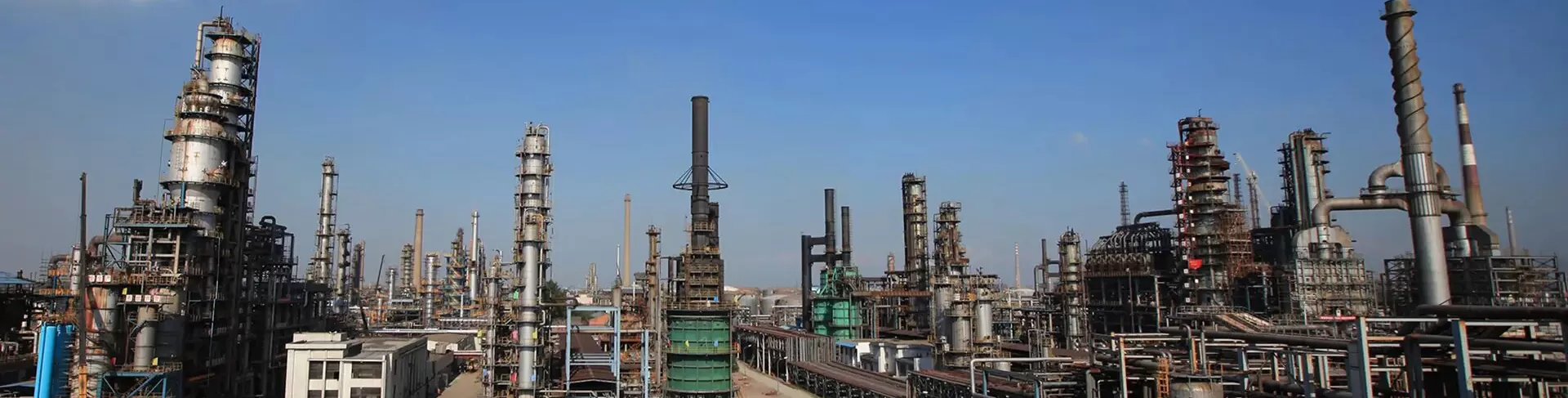
Ethylene Oxide Manufacturing Facilities Implementing Ceramic Random Packing for Petrochemical Intermediates

2025-11-24

Ethylene oxide (EO) production serves as a cornerstone in the petrochemical industry, enabling the synthesis of vital intermediates like ethylene glycol, ethanolamines, and polyols. These intermediates form the backbone of products ranging from plastics to pharmaceuticals, demanding high-purity outputs and consistent process reliability. In recent years, EO manufacturing facilities have increasingly turned to ceramic random packing as a critical upgrade, addressing longstanding challenges with traditional填料 (packing materials) such as poor chemical resistance, low thermal stability, and suboptimal mass transfer efficiency. This shift underscores the growing need for advanced separation technologies that enhance productivity while reducing operational costs in petrochemical intermediates production.


Key Advantages of Ceramic Random Packing in EO Facilities

Ceramic random packing, characterized by its inert, porous structure, offers distinct advantages tailored to EO manufacturing conditions. Unlike metal or plastic alternatives, ceramic materials exhibit exceptional chemical inertness, resisting corrosion from the strong acids and oxidizing agents prevalent in EO reactors—such as ethylene, oxygen, and catalyst solutions. This durability extends equipment lifespan, reducing the frequency of replacements and maintenance interruptions. Additionally, ceramics maintain stable performance at high temperatures, a critical factor in EO production, where reaction temperatures often exceed 200°C. Their low thermal expansion coefficient minimizes cracking or deformation under thermal cycling, ensuring consistent flow distribution and mass transfer efficiency. Complemented by a high specific surface area, ceramic packing enhances the contact between gas and liquid phases, increasing theoretical plate numbers and boosting product yield without compromising process stability.

Performance Improvements: From Lab Testing to Industrial Implementation

Field trials and industrial deployments have validated ceramic random packing’s transformative impact on EO processes. In a major petrochemical plant, replacing conventional metal structured packing with ceramic random packing led to a 7% increase in EO conversion rates, attributed to improved gas-liquid contact efficiency. Simultaneously, the packing’s low pressure drop reduced pump energy consumption by 12%, translating to annual operational savings of over $500,000. Moreover, ceramic packing’s resistance to fouling and attrition extended the facility’s run length between outages by 40%, from 18 to 25 months, significantly reducing unplanned downtime. These real-world results highlight how ceramic packing transforms theoretical advantages into tangible operational benefits, making it a cost-effective solution for EO intermediates production.

Future Trends: Innovations Shaping Ceramic Packing in Petrochemical Intermediates

The adoption of ceramic random packing is evolving with advancements in material science and process engineering. Ongoing research focuses on developing tailored ceramic compositions, such as adding rare earth oxides to enhance thermal shock resistance and mechanical strength, addressing limitations in high-stress environments. Customized packing geometries, designed through computational fluid dynamics (CFD) simulations, optimize fluid flow patterns, further reducing channeling and improving mass transfer. Additionally, integration with smart sensors allows real-time monitoring of packing performance—tracking pressure drop, temperature, and chemical degradation—enabling predictive maintenance and proactive process adjustments. These innovations position ceramic random packing as a versatile, future-proof technology in the dynamic landscape of petrochemical intermediates production.

FAQ:

Q1: How does ceramic random packing compare to plastic or metal options in EO manufacturing?

A1: Ceramics offer superior chemical resistance and thermal stability, making them ideal for harsh EO process conditions, while metal may corrode and plastic may degrade at high temperatures.

Q2: What is the typical lifespan of ceramic random packing in industrial EO facilities?

A2: With proper maintenance, ceramic packing typically lasts 5-7 years, depending on temperature, pressure, and chemical exposure levels, outperforming many alternatives.

Q3: Can ceramic packing be retrofitted into existing EO production lines, or does it require full system overhauls?

A3: It can often be retrofitted, minimizing downtime and maximizing ROI by replacing existing packing with minimal modifications to the production infrastructure.

We use cookie to improve your online experience. By continuing to browse this website, please agree to our use of cookie.

Cookies

Please read our Terms and Conditions and this Policy before accessing or using our Services. If you cannot agree with this Policy or the Terms and Conditions, please do not access or use our Services. If you are located in a jurisdiction outside the European Economic Area, by using our Services, you accept the Terms and Conditions and accept our privacy practices described in this Policy.
We may modify this Policy at any time, without prior notice, and changes may apply to any Personal Information we already hold about you, as well as any new Personal Information collected after the Policy is modified. If we make changes, we will notify you by revising the date at the top of this Policy. We will provide you with advanced notice if we make any material changes to how we collect, use or disclose your Personal Information that impact your rights under this Policy. If you are located in a jurisdiction other than the European Economic Area, the United Kingdom or Switzerland (collectively “European Countries”), your continued access or use of our Services after receiving the notice of changes, constitutes your acknowledgement that you accept the updated Policy. In addition, we may provide you with real time disclosures or additional information about the Personal Information handling practices of specific parts of our Services. Such notices may supplement this Policy or provide you with additional choices about how we process your Personal Information.


Cookies

Cookies are small text files stored on your device when you access most Websites on the internet or open certain emails. Among other things, Cookies allow a Website to recognize your device and remember if you've been to the Website before. Examples of information collected by Cookies include your browser type and the address of the Website from which you arrived at our Website as well as IP address and clickstream behavior (that is the pages you view and the links you click).We use the term cookie to refer to Cookies and technologies that perform a similar function to Cookies (e.g., tags, pixels, web beacons, etc.). Cookies can be read by the originating Website on each subsequent visit and by any other Website that recognizes the cookie. The Website uses Cookies in order to make the Website easier to use, to support a better user experience, including the provision of information and functionality to you, as well as to provide us with information about how the Website is used so that we can make sure it is as up to date, relevant, and error free as we can. Cookies on the Website We use Cookies to personalize your experience when you visit the Site, uniquely identify your computer for security purposes, and enable us and our third-party service providers to serve ads on our behalf across the internet.

We classify Cookies in the following categories:
 ●  Strictly Necessary Cookies
 ●  Performance Cookies
 ●  Functional Cookies
 ●  Targeting Cookies


Cookie List
A cookie is a small piece of data (text file) that a website – when visited by a user – asks your browser to store on your device in order to remember information about you, such as your language preference or login information. Those cookies are set by us and called first-party cookies. We also use third-party cookies – which are cookies from a domain different than the domain of the website you are visiting – for our advertising and marketing efforts. More specifically, we use cookies and other tracking technologies for the following purposes:

Strictly Necessary Cookies
These cookies are necessary for the website to function and cannot be switched off in our systems. They are usually only set in response to actions made by you which amount to a request for services, such as setting your privacy preferences, logging in or filling in forms. You can set your browser to block or alert you about these cookies, but some parts of the site will not then work. These cookies do not store any personally identifiable information.

Functional Cookies
These cookies enable the website to provide enhanced functionality and personalisation. They may be set by us or by third party providers whose services we have added to our pages. If you do not allow these cookies then some or all of these services may not function properly.

Performance Cookies
These cookies allow us to count visits and traffic sources so we can measure and improve the performance of our site. They help us to know which pages are the most and least popular and see how visitors move around the site. All information these cookies collect is aggregated and therefore anonymous. If you do not allow these cookies we will not know when you have visited our site, and will not be able to monitor its performance.

Targeting Cookies
These cookies may be set through our site by our advertising partners. They may be used by those companies to build a profile of your interests and show you relevant adverts on other sites. They do not store directly personal information, but are based on uniquely identifying your browser and internet device. If you do not allow these cookies, you will experience less targeted advertising.

How To Turn Off Cookies
You can choose to restrict or block Cookies through your browser settings at any time. Please note that certain Cookies may be set as soon as you visit the Website, but you can remove them using your browser settings. However, please be aware that restricting or blocking Cookies set on the Website may impact the functionality or performance of the Website or prevent you from using certain services provided through the Website. It will also affect our ability to update the Website to cater for user preferences and improve performance. Cookies within Mobile Applications

We only use Strictly Necessary Cookies on our mobile applications. These Cookies are critical to the functionality of our applications, so if you block or delete these Cookies you may not be able to use the application. These Cookies are not shared with any other application on your mobile device. We never use the Cookies from the mobile application to store personal information about you.

If you have questions or concerns regarding any information in this Privacy Policy, please contact us by email at . You can also contact us via our customer service at our Site.