

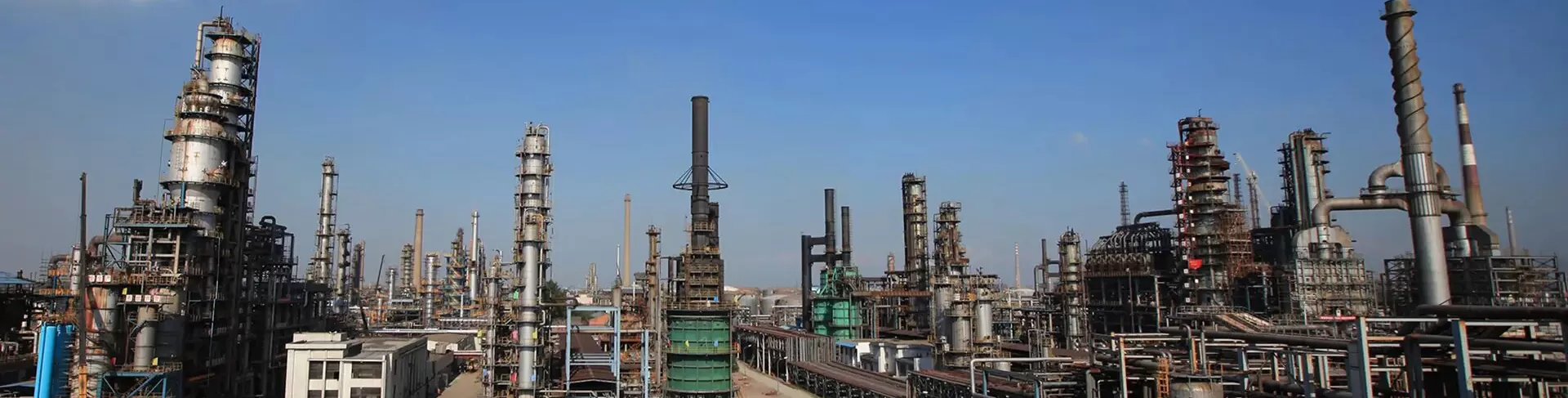
Wire mesh demisters are essential components in chemical processing, power generation, and industrial gas handling systems, engineered to separate entrained liquid droplets from vapor or gas streams. Their unique structure—interwoven metal wires forming a dense, uniform mesh—enables precise droplet capture, safeguarding downstream equipment and optimizing product recovery. Unlike conventional demisting methods, wire mesh demisters offer a blend of efficiency, durability, and adaptability that has made them indispensable in modern industrial operations.
.jpg)
High Separation Efficiency
The core strength of wire mesh demisters lies in their ability to achieve exceptional separation efficiency. The fine interlacing of metal wires creates a tortuous path for gas flow, ensuring even the smallest droplets (as small as 5 micrometers) are trapped. This high efficiency, often exceeding 99.9% for submicron droplets, minimizes product loss and protects critical equipment like compressors, heat exchangers, and distillation columns from erosion or contamination. In applications such as acetic acid production and solvent recovery, their performance ensures process stability and compliance with strict purity standards.
Compact Design and Space Optimization
A defining advantage of wire mesh demisters is their compact, lightweight structure. Unlike bulky alternatives like baffle separators, which require significant vertical space and structural support, wire mesh demisters can be integrated into narrow, modular designs. This not only saves installation space but also reduces material costs, as less structural support is needed. For small-scale chemical plants or retrofitting projects, their portability simplifies integration, while their low weight (typically 5-10 kg/m²) further reduces load on equipment foundations.
Superior Corrosion Resistance and Longevity
Wire mesh demisters are engineered to withstand harsh chemical and environmental conditions. Constructed from materials like stainless steel 316L, titanium, or nickel alloys, they resist corrosion from acids, alkalis, and solvents. This durability ensures a service life of 10+ years in aggressive environments, far exceeding the 3-5 years of conventional plastic or low-grade metal demisters. For example, in sulfuric acid production, titanium wire mesh demisters maintain performance even at high temperatures and extreme acidity, reducing maintenance downtime and replacement costs.
Low Pressure Drop for Energy Efficiency
The porous, open structure of wire mesh demisters minimizes airflow resistance, resulting in low pressure drop across the unit. This is critical for energy-intensive processes, as lower pressure drops reduce the load on blowers and fans, lowering electricity consumption by up to 30% compared to baffle-type separators. In large-scale chemical plants with continuous operation, this translates to significant energy savings, aligning with sustainability goals and reducing operational expenses.
FAQ:
Q1: How does a wire mesh demister compare to折流板 (baffle) demisters in efficiency?
A1: Wire mesh demisters excel at capturing fine droplets (≤5μm) with efficiency up to 99.9%, while baffle demisters typically handle larger droplets (≥20μm) with lower efficiency (~90%).
Q2: What wire diameters are commonly used for wire mesh demisters?
A2: Standard diameters range from 0.15mm to 1.2mm, with finer wires (0.15-0.3mm) for high-efficiency capture of submicron droplets and thicker wires (0.5-1.2mm) for high-pressure applications.
Q3: Can wire mesh demisters be customized for specific chemical environments?
A3: Yes, materials like Hastelloy C276, Monel, or PTFE-coated steel can be used to suit unique conditions, such as high-temperature steam or corrosive gas streams.